 EN
EN
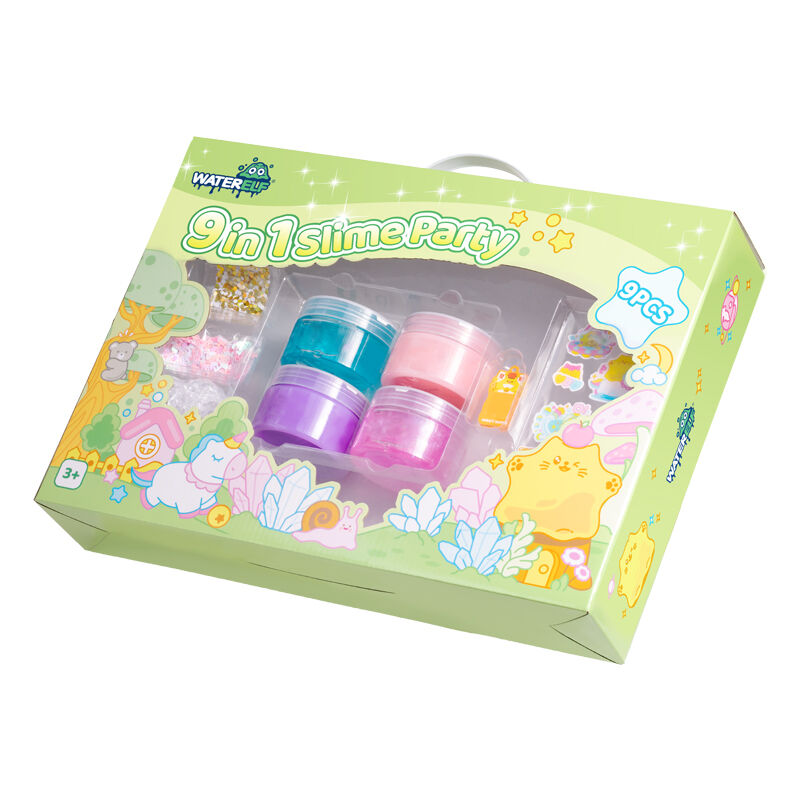
Why a Colorful Slime Kit Enhances Sensory Development
Tactile exploration and neural engagement through vibrant, multi-texture slime
Playing with colorful slime helps kids build important sensory skills as they squish and stretch it around. Bright colors catch their eyes first, then all sorts of different textures come into play - sometimes soft and fluffy, other times crunchy or bumpy. These experiences actually help form connections in the brain related to solving problems, managing emotions, and staying focused on tasks. When children work with glittery goo or press down on slime filled with beads, they're learning about how materials behave just by messing around with them. They figure out things like how something can stretch without breaking, what happens when pressure is applied, and why certain slimes stick together better than others, all without anyone telling them what to do. This kind of hands-on discovery sparks curiosity and makes kids think differently about stuff, something regular classroom teaching doesn't always achieve.
Fine motor skill building with color-based manipulation (rolling, stretching, layering)
Playing with colorful slime kits isn't just fun for kids, it actually helps build important developmental skills. When they separate different colors, roll them together, or layer one on top of another, this activity works those small hand muscles needed later for writing and handling tools properly. Kids get really good at being precise when they stretch out blue "rivers" across green "hills," twist up rainbow colored coils, or stick little sequins right where colors meet. These kinds of hands-on activities help improve how well both sides of their brain work together and boost finger flexibility too. Studies looking at motor development in young children have found that regular sensory play can improve fine motor control by around 40% among preschoolers. Watching colors blend together gives kids immediate visual results, which teaches them about cause and effect relationships in a way that makes learning these skills feel tangible and actually enjoyable.
How to Use a Colorful Slime Kit for Creative Learning
Color theory and science: Mixing primary colors to discover secondaries and tertiaries
Turn that slime kit into a real color lab where kids can explore how colors mix together. Start simple with basic colored slimes like red, blue, and yellow. Let the kids experiment mixing these in small amounts. When they squish equal parts red and yellow together, guess what? Orange! Mix blue and red and suddenly there's purple appearing right before their eyes. Once they get comfortable with those basics, try teaching them about those fancy tertiary colors such as blue-green or red-violet by blending one primary color with its neighboring secondary shade. Nothing beats actually getting messy with the stuff for understanding how colors relate to each other compared to just looking at pictures in books. Plus, the whole experience sticks better because little fingers get all involved feeling how the slime changes texture and gets darker or lighter as different pigments combine. A good tip though is to stick to only two colors at a time during each mixing session otherwise everything turns muddy brown really fast.
STEM integration: Measuring, ratios, and cause-effect in slime activation
Making slime becomes a great way to bring math and chemistry together when approached with some scientific curiosity. Grab those measuring spoons and start playing around with different ratios, like mixing one part activator with four parts glue. What happens if we throw in twice as much activator? The slime gets really stiff pretty fast. Cut back on the activator by half? Well, that just makes everything super gooey and hard to handle. These little experiments show kids all about materials science without needing any fancy words or complicated explanations. Keep track of what works and what doesn't in a basic chart so patterns become clear over time.
| Activator Ratio | Slime Texture | Stretch Length |
|---|---|---|
| 1:8 | Sticky, runny | <2 inches |
| 1:4 | Ideal elasticity | 12+ inches |
| 1:2 | Rigid, crumbly | 3 inches |
Children hypothesize, test variables—including temperature and mixing speed—and refine techniques, sharpening logical reasoning through sensory play. The process mirrors real polymer chemistry, where cross-link density dictates flexibility and resilience.
Practical Applications: Slime Kit Use in Classrooms, Camps, and Parties
Colorful slime kits go way beyond just playing at home. They actually work great for structured sensory activities in all sorts of group environments. Teachers have started using these kits as mobile science stations in their classrooms. When kids get hands on with different textures, it helps them stay focused during those tricky transition periods between lessons. Some studies even suggest that working with slime this way might cut down classroom anxiety levels around 40%. Summer camps are getting creative too, turning slime making into team based STEM projects. Campers mix colors, test how long things take to activate, and write down what happens when they combine ingredients. It's basically fun science mixed with art. At birthday parties, parents love the pre-packed kits because guests can personalize their slimes with glitter, beads, and bright colors without making a mess everywhere. The kits come with everything needed plus containers so nobody brings home sticky fingers. These celebrations become something more than just cake and presents. Kids end up working together to create their own special sensory experiences while having a blast.
Choosing a Safe, High-Quality Slime Kit for Kids
Non-toxic ingredients, ASTM F963 compliance, and skin-safe colorants
When shopping for slime kits, look for ones labeled as non-toxic and meeting ASTM F963 standards from the American Society for Testing and Materials. These standards ensure basic safety for kids' toys. Many good quality slimes now include skin safe colorants so little hands can play with them for longer periods without irritation issues. Transparent ingredient lists are also important because they let parents know what exactly goes into the product. No one wants hidden stuff like borax or phthalates messing up sensory play experiences. Most reputable brands have switched to using plant based pigments and food grade materials instead. Independent testing shows these safer ingredients cut down allergy risks around 75-80% when compared to older formulations. That makes a real difference for sensitive children who might react badly to traditional chemical additives.
Sensory inclusivity: Low-odor, non-sticky, and texture-modifiable options
When choosing materials, go with low smell options and stuff that doesn't leave behind residue since this really matters for kids with sensory issues, particularly those on the autism spectrum or anyone sensitive to strong smells. The better quality play kits let parents tweak how runny or thick they want it to be just by mixing in some cornstarch if they need something thicker, or adding glycerin when they prefer something that flows better. What makes these products so great is how adaptable they are for different needs. Some kids love working with something almost like modeling clay, while others enjoy watching things slowly drip and stretch out. Best part? None of these adjustments compromise safety standards, cleaning up remains straightforward, and all the while the activities still help develop important motor skills and coordination abilities.
Frequently Asked Questions (FAQ)
What are the benefits of using colorful slime kits for children?
Colorful slime kits enhance sensory skills, fine motor development, creativity in learning about color theory, and provide a hands-on approach to STEM learning.
How does playing with slime help in cognitive development?
Playing with slime aids in neural engagement through tactile exploration. It enhances problem-solving skills, emotional management, and concentration.
Are colorful slime kits safe for kids?
Yes, when they are labeled as non-toxic and compliant with ASTM F963 standards, they are generally safe. Look for kits with skin-safe colorants and transparent ingredient lists.
Can slime kits be used in educational settings?
Absolutely. Slime kits are used in classrooms as science stations, at camps for STEM projects, and at parties for creative activities.
How do slime kits cater to kids with sensory issues?
Slime kits with low-odor, non-sticky options, and texture modifications meet the needs of kids with sensory sensitivities, including those on the autism spectrum.