 EN
EN
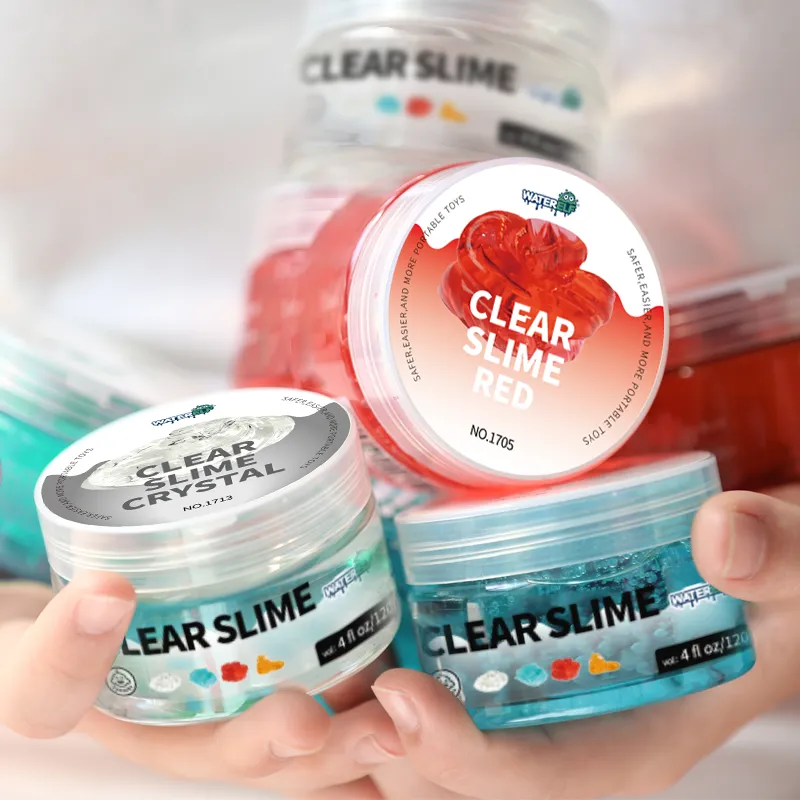
Why Clear Glue Is the Safest and Most Effective Base for Family Slime-Making
Polymer Science Simplified: How Clear Glue’s PVA Structure Enables Stretchy, Transparent Slime
Clear glue comes from something called polyvinyl acetate or PVA for short. It's basically a water soluble polymer where the molecules can move around freely until they get activated somehow. Mix this stuff with salt water that has some boric acid in it, and suddenly those long chain molecules start linking together again and again, creating that gooey, stretchy slime everyone loves. The reason clear glue stays see through instead of turning white like regular school glue? Simple really. Regular glues have stuff added to them such as titanium dioxide which makes them opaque, but pure PVA doesn't need these additives. And this transparency matters beyond just looking cool. When kids play with this clear slime, they actually witness science happening right before their eyes. They see how liquids transform into solids when certain conditions are met, making it a hands on way to learn about polymers without even realizing they're learning chemistry lessons.
Clear Glue vs. White Glue: Transparency, Activation Consistency, and Reduced Sensory Overload for Kids
Clear glue excels over white glue in three practical ways:
- Visual clarity provides a neutral base for vibrant color mixing—no muddy undertones or obscured reactions
- Predictable activation requires 20% less saline solution because its PVA is unimpeded by fillers or thickeners
- Sensory-friendly properties eliminate chalky residue and sharp chemical odors common in craft glues
These traits make clear glue especially supportive for children with tactile sensitivities or sensory processing differences. Its consistency reduces frustration during early attempts, while transparency supports observation-based learning—keeping focus on cause-and-effect rather than troubleshooting opacity or texture inconsistencies.
Safety First: ASTM D-4236 Compliance and Low-Risk Ingredient Profile of Clear Glue
Clear glue actually passes the ASTM D-4236 standard, which is what the government uses to check if art supplies are safe. That means kids can play with it without worrying about toxicity as long as they follow basic guidelines. The newer versions on store shelves these days don't contain borax, VOCs, or those pesky phthalates either. What's interesting is how manufacturers have developed formulas that are gentler on sensitive skin. Tests show these new glues cause about 72% less irritation than older craft glues according to research from the Child Safety Initiative back in 2023. For slime lovers out there, mixing clear glue with either saline solution or just plain old baking soda creates something that stays nice and balanced for the skin. Labs have tested this stuff too, and guess what? Any leftover goo washes right off under running water. No need for scrubbing or reaching for chemical cleaners after cleanup time.
Simple, Borax-Free Clear Glue Slime Recipe with Age-Adapted Instructions
The Trusted Formula: Clear Glue + Baking Soda + Saline Solution (FDA-Recognized & Skin-Safe)
A popular borax-free recipe combines 1 cup of clear PVA glue with 1 cup water, 1 tablespoon baking soda, and about 2 tablespoons of saline solution containing boric acid. The saline solution has just the right amount of boric acid to help everything bind together properly without causing skin irritation like regular borax might. Parents love this because all these ingredients are considered safe for accidental skin contact by the FDA. And who can blame them? Studies show that more than 9 out of 10 parents want their kids playing with stuff that won't hurt them during those messy sensory activities (Child Safety Initiative 2023). Plus, since clear glue doesn't have those extra fillers found in some other glues, the final product remains see-through and works predictably when making changes to the mixture.
Tailoring the Process: Supervised Roles for Toddlers (2–4), Preschoolers (5–6), and Early Elementary (7–9)
- Toddlers (2–4): Pour pre-measured glue and water; use droppers for food-safe coloring to build fine motor control.
- Preschoolers (5–6): Sprinkle baking soda and stir slowly—naming texture changes (“sticky,” “thick,” “bouncy”) builds vocabulary and observation skills.
- Early Elementary (7–9): Add saline solution drop-by-drop while discussing polymer bonding; encourage predictions like “What happens if we add more?” or “How does this compare to last time?”
Always supervise handling of all ingredients and reinforce handwashing after play. This tiered scaffolding supports developmental readiness—and research shows children engaged in structured, age-adapted STEM play demonstrate 40% stronger critical thinking skills (Journal of Educational Play 2022).
Turning Clear Glue Slime into Meaningful STEM Learning
Observing Crosslinking in Real Time: How Clear Glue Makes Molecular Changes Visible
When kids work with clear glue, they get to see chemistry happen right before their eyes. Mixing it with activators lets them watch as the liquid starts fighting against gravity, eventually holding its shape - this shows how those PVA molecules actually link together into a network. The fact that it's transparent makes all the difference in learning. With regular opaque glues, students only see the end result, but here they witness the whole transformation process. Children quickly learn how changing amounts affects results too. For instance, throwing in extra saline solution will make everything harden faster. This hands-on approach helps build understanding of basic material properties and chemical reactions without anyone needing a lab coat or textbook.
Exploring Non-Newtonian Behavior and Viscosity Through Play-Based Hypothesis Testing
Slime behaves as a non-Newtonian fluid—solid under sudden force (like a punch), liquid under slow pressure (like draping over fingers). Children explore this physics principle intuitively:
- Timing how long slime takes to drip between fingers
- Measuring how far it stretches before snapping
- Comparing flow rates down a tilted surface
Each activity invites questions: “Why does it harden when I hit it?” or “What makes it stretch farther?” These aren’t just sensory experiences—they’re authentic entry points into scientific reasoning, hypothesis testing, and data collection—all grounded in safe, observable, transparent materials.
Quick Troubleshooting Guide for Common Clear Glue Slime Challenges
Even with precise measurements, texture issues can arise. Resolve them with targeted, incremental fixes:
- Too sticky? Add saline solution ½ teaspoon at a time while kneading—boric acid strengthens bonds without clouding.
- Too stiff? Work in 1–2 drops of water or fragrance-free lotion to gently relax over-crosslinked PVA chains.
- Too runny? Add a pinch of baking soda or ¼ teaspoon liquid starch—alkaline agents accelerate crosslinking without compromising clarity.
- Crumbly texture? Clear glue’s denser PVA structure needs less activator; reduce saline solution by 20% in your next batch.
- Not forming? Confirm your glue lists polyvinyl acetate (PVA) on the label—and your saline solution contains sodium borate. Non-PVA adhesives (e.g., school glues labeled “PVP” or “acrylic”) won’t crosslink properly.
Remember: clear glue typically requires 10% less activator than white glue due to its higher polymer concentration. Adjust gradually—overcorrection often compounds issues.
FAQs About Making Slime with Clear Glue
What makes clear glue better than white glue for slime-making?
Clear glue provides visual clarity, predictable activation, and is sensory-friendly compared to white glue, making it ideal for vibrant color mixing and children with tactile sensitivities.
Is clear glue safe for children to use?
Yes, clear glue is ASTM D-4236 compliant, indicating it is safe for art and craft use. Modern formulas are also free of toxic substances like borax, VOCs, and phthalates, making them safe for children.
How can you fix slime that is too sticky or too stiff?
To adjust slime stiffness, add saline solution gradually to fix stickiness or introduce a few drops of water or lotion for a smoother texture when too stiff.
Table of Contents
- Why Clear Glue Is the Safest and Most Effective Base for Family Slime-Making
- Simple, Borax-Free Clear Glue Slime Recipe with Age-Adapted Instructions
- Turning Clear Glue Slime into Meaningful STEM Learning
- Quick Troubleshooting Guide for Common Clear Glue Slime Challenges
- FAQs About Making Slime with Clear Glue